Sanjay Van, a significant green expanse in Delhi, recently hosted an extensive Moth Survey in the Lal Kot region. Conducted collaboratively by WWF-India and the Delhi Development Authority (DDA), this survey aimed to document moth diversity and raise awareness about their ecological significance. The event was part of the global initiative "National Moth Week 2024."
Survey Overview
- Duration: 20-07-2024 to 28-07-2024
- Location: Lal Kot, Sanjay Van
- Participants: WWF-India Team and 20-member teams from DDA
Objectives
- To study the moth diversity in Lal Kot, Sanjay Van.
- To sensitize people about the ecological role of moths.
Introduction
Moths, belonging to the order Lepidoptera, play a crucial role in ecosystems as pollinators, prey, and environmental indicators. Unlike butterflies, moths are predominantly nocturnal, with their body divided into three sections: Head, Thorax, and Abdomen. They undergo a four-stage life cycle: Egg, Caterpillar (Larva), Pupa, and Adult.
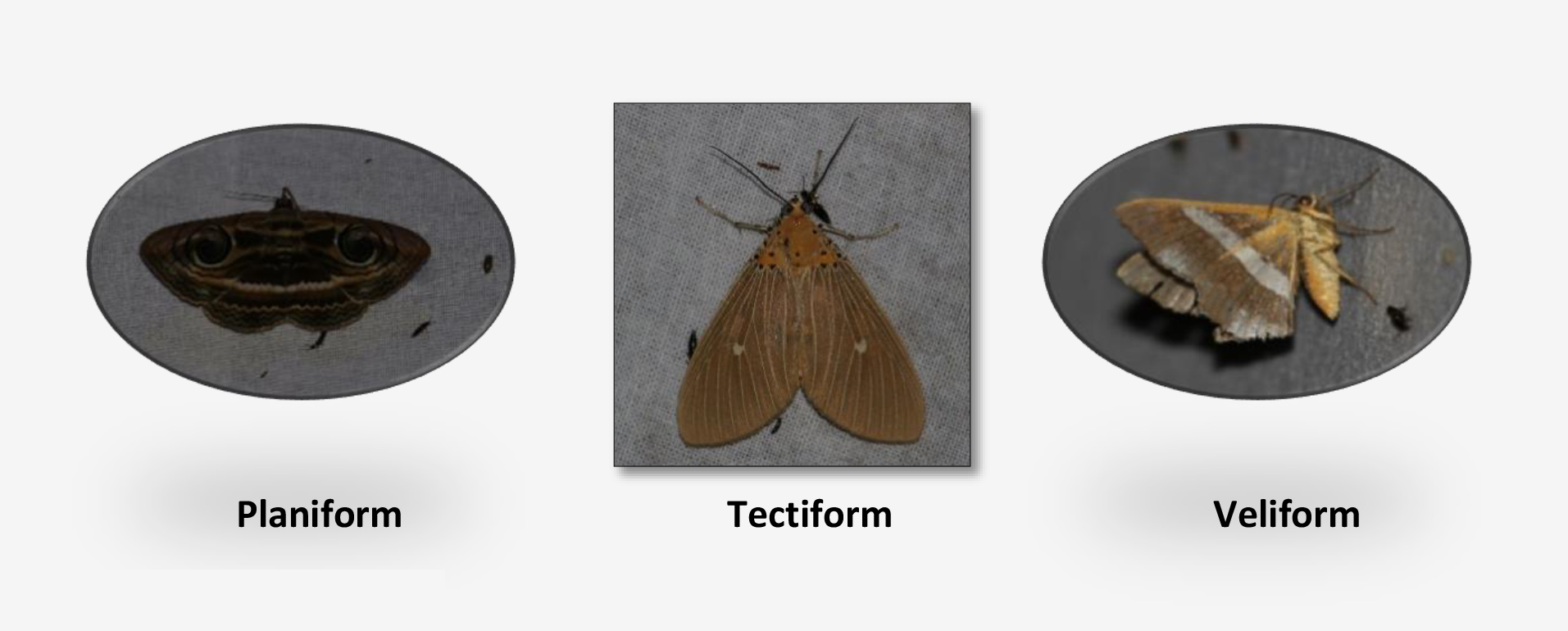 Understanding Moth Morphology
Methodology
The survey employed a non-invasive light trap method, which is highly effective in attracting and studying moths. The setup included:
- Equipment: 1 LepiLED Light, 1 (1.25 x 2 m) Cotton White Sheet, Rope
- Survey Time: 8:30 PM to 11:00 PM
A bright white sheet was placed in the study area with a LepiLED light suspended above it. Moths attracted to the sheet were photographed and recorded using the citizen science platform iNaturalist.
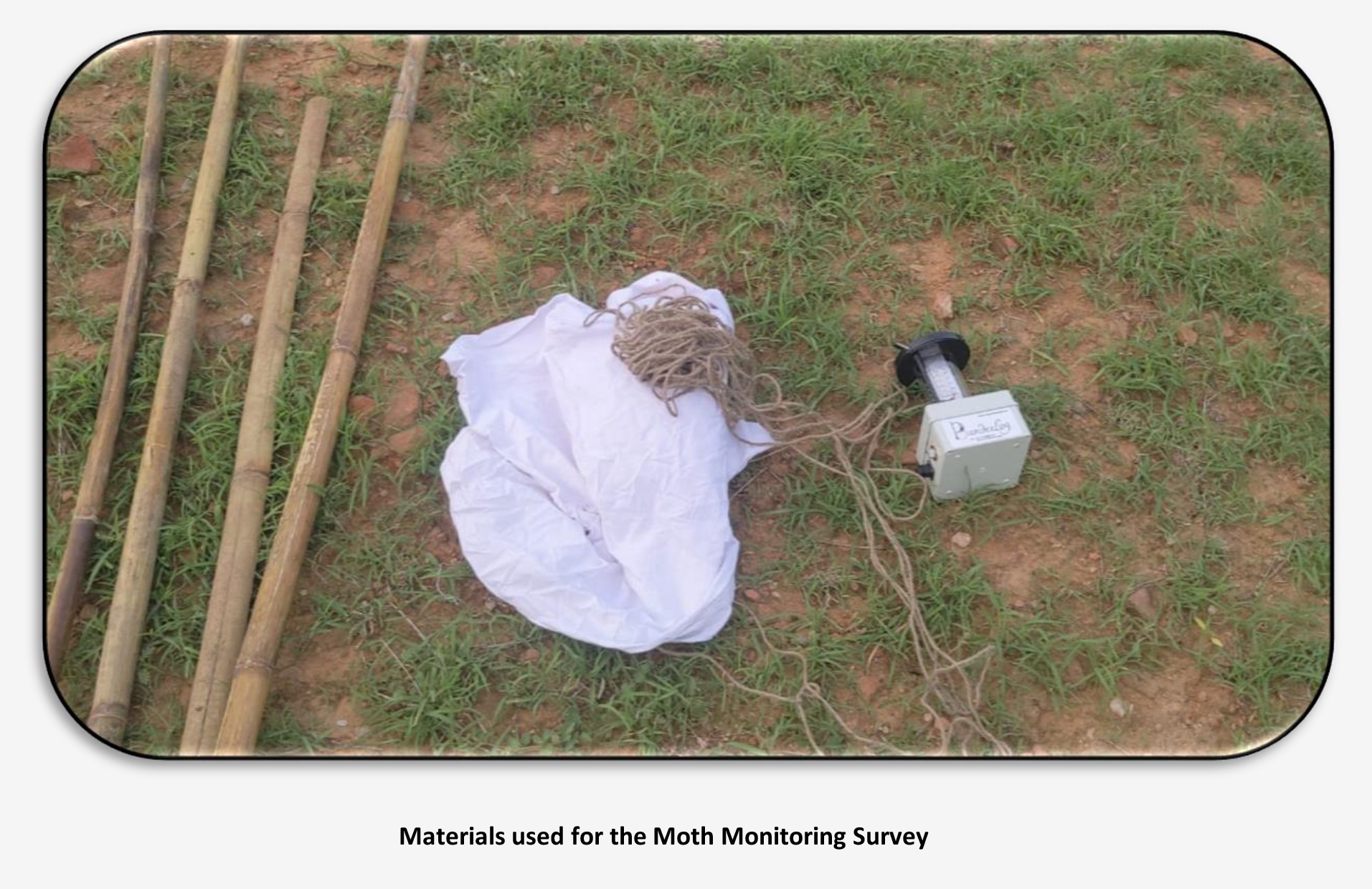 Light Trap Setup
Findings
The survey identified over 110 moth species in Lal Kot, Sanjay Van. This richness indicates the area’s favorable habitat conditions for moth populations. Noteworthy species recorded include:


 Some of the observed moth species
The data collected will serve as a baseline for understanding seasonal variations in moth populations. Future surveys are planned to build a comprehensive database for conservation efforts.
Conclusion
The Moth Survey in Sanjay Van 2024 was a successful initiative that highlighted the importance of moth conservation. Through dedicated efforts by volunteers and scientific documentation, this project contributes to a deeper understanding of urban biodiversity. As we move forward, continued monitoring and public engagement will play a crucial role in preserving Delhi’s ecological heritage.